
How Casino Slot Hit Frequency Is Calculated
Stepping onto the glowing floor of any modern casino immediately exposes a visitor to an overwhelming cascade of flashing lights and chiming sounds, though few patrons pause to evaluate the foundational architecture powering those screens, such as the details outlined in this . This point can also be viewed alongside mino casino login for additional context. Beneath the glossy exterior of every casino slot machine lies a complex web of programming that dictates how often payouts occur. Rather than relying on mystical luck or unpredictable streaks, a machine operates on strict mathematical models. Determining the precise hit frequency requires engineers to balance player retention against long-term profit margins, contrasting sharply with simpler games that rely purely on basic card draws or spinning wheels without internal symbol weighting.
How Reels Connects With Physical
To understand how this metric functions, one must first look at the traditional approach used by mechanical reels versus modern digital units. Early mechanical reels relied on physical physical stops and fixed gear ratios, meaning the hit frequency was physically restricted by the actual number of symbols printed on each metal band. If a lemon appeared on a reel only once among twenty symbols, the mathematical probability of landing that specific icon was locked at one in twenty. In contrast, modern casino technology utilizes virtual reels mapped by a pseudorandom number generator. This software approach allows manufacturers to assign dozens of virtual stops to a single physical symbol, completely altering the calculated hit frequency without needing to physically expand the cabinet size.
Another major contrast appears when comparing high-volatility math models to low-volatility alternatives. When a designer builds a low-volatility casino slot, the hit frequency is intentionally inflated so that a player experiences small wins on roughly every three or four spins. This frequent trickle of rewards keeps the balance stable and extends playtime, which pleases visitors who enjoy prolonged engagement. Conversely, high-volatility titles drastically reduce the hit frequency, sometimes dropping winning combinations down to every ten or fifteen spins. However, those rare payouts are calculated to be significantly larger, offering a starkly different risk and reward balance for patrons inside the casino.
• This software approach allows manufacturers to assign dozens of virtual stops to a single physical symbol, completely altering the calculated hit frequency without needing to physically
• Another major contrast appears when comparing high-volatility math models to low-volatility alternatives
• This frequent trickle of rewards keeps the balance stable and extends playtime, which pleases visitors who enjoy prolonged engagement
• Conversely, high-volatility titles drastically reduce the hit frequency, sometimes dropping winning combinations down to every ten or fifteen spins
• For example, if a machine has one million possible unique alignment permutations and two hundred thousand of those yield some form of payout, the resulting hit frequency is twenty percent
• A casino slot might boast a high hit frequency of thirty percent, yet the vast majority of those winning spins might award prizes smaller than the initial bet
• Understanding this divergence explains why a player can experience frequent small returns while their overall bankroll slowly diminishes over an evening at the casino
A Closer Look at Total
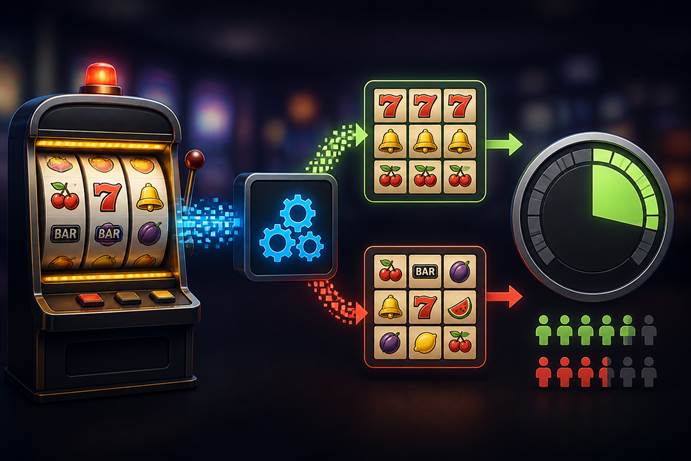
Calculating the exact percentage involves dividing the total number of winning combinations by the total number of possible outcomes on the virtual reels. For example, if a machine has one million possible unique alignment permutations and two hundred thousand of those yield some form of payout, the resulting hit frequency is twenty percent. Designers adjust these figures continuously during testing phases to ensure the machine meets regulatory requirements while delivering the desired entertainment pacing. Every single symbol position, payline configuration, and bonus trigger contributes to this final mathematical fraction.
It is also essential to distinguish hit frequency from the return to player percentage, as the two terms are frequently confused by casual observers. While the hit frequency dictates how often a player sees any win at all, the return to player measures the total proportion of wagered money that the machine pays back over millions of spins. A casino slot might boast a high hit frequency of thirty percent, yet the vast majority of those winning spins might award prizes smaller than the initial bet. Understanding this divergence explains why a player can experience frequent small returns while their overall bankroll slowly diminishes over an evening at the casino.
Ultimately Through the Lens of Examining
Ultimately, examining the arithmetic behind these machines strips away much of the superstition surrounding reel-based gambling. Whether a particular device is engineered for rapid, small-scale rewards or infrequent, massive payouts, the underlying mathematics remain absolute and unyielding. Recognizing these structural differences helps visitors maintain realistic expectations regarding their time and financial investment while walking the floor of any commercial casino.
